Why Your Service Business is Leaking Revenue: The Hidden Cost of Inconsistent Sales Systems
You are working harder than ever. Your phone rings, your inbox is full, and you spend your evenings sending proposals. On paper, your service business is thriving. But the bank account doesn't reflect the effort. You are running on a treadmill.
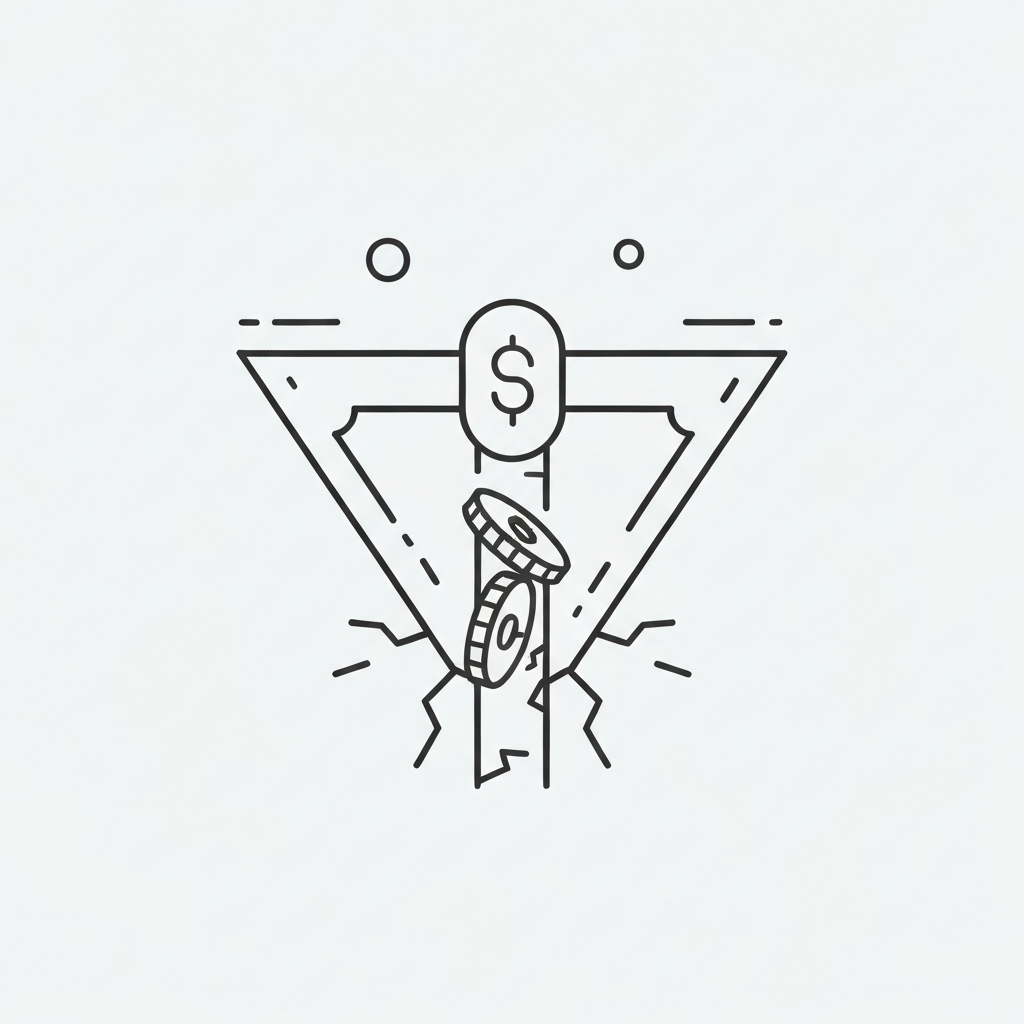
If this sounds familiar, you are likely suffering from inconsistent sales systems. The problem isn't a lack of leads. The problem is that your business is leaking revenue through dozens of tiny holes in your sales process. You pay for leads that never get called, send proposals that never get followed up on, and lose deals to competitors who simply responded faster.
In this guide, we dive into the hidden costs of these inconsistencies. We look at the actual mechanics of a sales engine and how to build a system that turns every inquiry into a predictable outcome.
The Real Problem: The Chaos of Manual Sales
Most small businesses start with manual sales. In the beginning, this works. When you only have two or three leads a week, you can remember their names, you can keep track of their needs in your head, and you can manually send them an email when you have a free moment. You are the "hero" of your sales process, and your personal touch is what wins the business.
But as you grow, the "hero" model breaks. When two leads turn into twenty, and twenty turn into fifty, your brain can no longer keep up. This is where the chaos begins. You start relying on sticky notes, flagged emails, and "mental checklists." You tell yourself you'll call that prospect back tomorrow, but then a job site emergency happens, a staff member calls out sick, or you just get plain exhausted. Tomorrow becomes next week, and next week becomes never.
The chaos of manual sales is rooted in human fallibility. We are forgetful, we are emotional, and we are easily distracted. When your sales process depends on a human being (you or a staff member) remembering to take every single step correctly every single time, you have created a system designed to fail. This inconsistency creates a "revenue leak" that is invisible on your balance sheet but devastating to your growth.
Furthermore, manual sales create an environment of constant "reactive" work. You are always playing catch-up. You are responding to the loudest lead, not necessarily the most valuable one. You are frantic instead of focused. This lack of structure doesn't just lose you money; it burns you out. You end up resenting the very leads you worked so hard to generate because they represent more "work" that you aren't sure you can handle.
Why This Is Costing You Money: The Math of Missed Opportunities
Let's look at the actual math of an inconsistent sales process. Most business owners underestimate the value of a single lead. They think, "Oh, it's just one missed call, I'll get the next one." But that one missed call has a massive ripple effect on your long-term revenue.
Consider this: If your average customer is worth $5,000 in lifetime value, and you miss just two leads a week because of poor follow-up or slow response times, you are losing $10,000 a week in potential revenue. That is over $500,000 a year in "leaked" money. This isn't money you might have made; this is money from people who were actively looking for your service and had their credit cards out, but you weren't there to take it.
Beyond the direct loss of the sale, there is the cost of acquisition. If you are spending money on ads or SEO, every lead has a literal price tag. When a lead comes in and you don't follow up effectively, you are essentially taking $50 or $100 of your hard-earned marketing budget and throwing it in the trash. When this happens dozens of times a month, your marketing ROI plummets, making you believe your ads "don't work" when the reality is your sales system is broken.
There is also the cost of "lost reputation." In the age of instant reviews, a slow or inconsistent sales experience is a public liability. If a prospect reaches out and gets ignored, they don't just go to a competitor; they tell their friends that you are "unreliable." They leave a 3-star review saying you "never called back." This damage to your brand makes every future lead harder and more expensive to acquire.
Wondering where your system is breaking down?
Take the Sales Pipeline Health Check to identify the gaps in your follow up and conversion process.
Start the Health CheckWhat Most Businesses Get Wrong: The "More Leads" Fallacy
When revenue is flat or declining, the knee-jerk reaction for most business owners is to "buy more leads." They call their marketing agency and ask to increase the ad spend. They hire a new SEO firm. They start posting more on social media. They believe that if they just pour more water into the bucket, it will eventually fill up.
But if your bucket has holes in the bottom, pouring more water in won't fix the problem. It will just waste more water. This is the "More Leads" Fallacy. If your current close rate is 10% because of poor follow-up and zero tracking, doubling your leads will just double your frustration. You will be twice as busy, twice as stressed, and you will still be leaking 90% of your opportunities.
The smartest businesses focus on "yield" before "volume." They ensure that their sales system is watertight before they spend a single additional dollar on lead generation. They understand that increasing your close rate from 10% to 20% through better systems is far more profitable than doubling your lead volume. Why? Because the leads you already have are "free" (you've already paid to get them). Every additional percent you convert from your existing pool is pure profit.
Another common mistake is trying to solve a system problem with a "people" solution. Business owners often think, "I just need to hire a better sales rep." But a great sales rep entering a broken system will either fail or leave. They need a playbook, they need tracking, and they need automation to handle the busywork so they can focus on closing. Without a system, you are just setting your new hire up for failure.
What Actually Works: Moving from Chaos to System
The solution to inconsistent sales is to move from a "person-dependent" process to a "system-dependent" process. You need to build a sales engine that operates with the same precision as a piece of machinery. This engine doesn't get tired, it doesn't forget, and it doesn't have "bad days."
A true sales system is built on three pillars:
- Organization: Ensures every lead has a home.
- Automation: Ensures every lead gets a response.
- Accountability: Ensures every lead has a next step.
When these three pillars are in place, the chaos disappears, and you gain something most business owners only dream of: predictability.
Transitioning to a system-based approach requires a shift in how you view your business. You have to stop seeing yourself as a "provider of [service]" and start seeing yourself as the "operator of a sales and delivery system." Your job isn't to do the work; your job is to ensure the system that does the work is functioning at peak efficiency. This shift in perspective is what separates a "job" from a "business."
When you have a system, you can finally step back. You can look at your dashboard and see exactly where the bottlenecks are. You can see that your "Lead to Booking" rate is high, but your "Booking to Close" rate is low. This data allows you to make surgical improvements rather than guessing. It gives you the confidence to scale because you know that if you put $1 into the front of the system, you will get $5 out of the back.
How a Sales System Fixes This
So, what does a sales system actually do to fix these problems? It replaces human effort with engineered reliability in four key areas:
1. Lead Tracking: No More Lost Names
In a manual world, leads are scattered across post-it notes, emails, and call logs. In a custom sales system, every single inquiry is automatically funneled into a central database. This "single source of truth" ensures that no one is ever forgotten. You can see every lead's name, their source, their history, and their current status in one glance.
2. Automated Follow-Up: The Power of Persistence
Most sales are won between the 5th and 8th touchpoint, yet most business owners stop after one or two. A sales system automates this persistence. The moment a lead comes in, they get an instant SMS. An hour later, they get a personalized email. Two days later, another nudge. This happens automatically, 24/7, without you lifting a finger.
3. Pipeline Visibility: Knowing Where Everyone Is
A sales system provides a visual pipeline that shows you exactly where every prospect is in their journey. Are they a "New Lead"? Have they "Booked a Call"? Has a "Proposal Been Sent"? This visibility allows you to manage by exception and quickly scan your board to see which stages are clogged and need attention.
4. Data-Driven Decision Making
Because every action is tracked, your sales system generates real data. You no longer have to guess what marketing is working; you can see that your ads are converting at a specific rate. This data allows you to stop wasting money on what doesn't work and double down on what does.
What This Looks Like in Practice: A Tale of Two Businesses
To understand the impact of a sales system, let's look at two hypothetical service businesses:
Business A (Manual Chaos)
- • A lead submits a form at 8:00 PM on a Tuesday.
- • The owner sees the email at 9:30 AM on Wednesday.
- • He makes a mental note to call them later. He forgets.
- • He remembers at 7:00 PM on Thursday and calls.
- • The prospect doesn't answer. He leaves a voicemail.
- • The lead is lost.
Total cost: $50 in ad spend + $5,000 in lost revenue.
Business B (Systemized Engine)
- • A lead submits the same form at 8:00 PM on a Tuesday.
- • Within 30 seconds, they receive an automated SMS.
- • The prospect clicks the link and books a call for Thursday.
- • The system automatically sends a confirmation email and reminder.
- • The owner shows up, closes the deal, and triggers onboarding.
Total revenue: $5,000. Time spent: 30 minutes.
The difference between these two businesses isn't the quality of the service; it's the quality of the system. Business B is scalable, profitable, and calm. Business A is stagnant, leaking money, and frantic.
The Psychological Impact: From Burnout to Breakthrough
We often talk about systems in terms of numbers—close rates, ROI, and lead volume. But the most profound impact of a sales system is often psychological. When you are running a manual, chaotic sales process, you are in a state of constant "low-grade anxiety." You know you are forgetting things. You know there are people you should have called back. You know you are leaving money on the table.
This anxiety drains your creative energy. It makes you a less effective leader and a less present family member. It creates a ceiling on your ambition because, subconsciously, you are afraid of getting too many leads. You know that more leads just means more chaos. A sales system removes this ceiling. It gives you the "permission to grow" because you know that your infrastructure can handle the weight of your success.
Imagine waking up on a Monday morning and, instead of dreading the pile of unread emails and missed calls, you simply open your dashboard. You see exactly who needs a call, who just received an automated follow-up, and which deals are ready to close. You are no longer "working for your business"; you are "directing your system." This shift from operator to architect is the true goal of every entrepreneur.
How to Start: The 3-Phase Implementation
If the idea of building a complete sales engine feels overwhelming, remember that you don't have to build it all in one weekend. We recommend a phased approach that allows you to see results immediately while building the long-term infrastructure.
Phase 1: The Audit and Clean Up
Start by identifying every single place a lead can enter your business. Is it your website? Your personal cell phone? Your Instagram DMs? Your Facebook page? Your referral partners? List them all out. Then, choose a central place (a CRM) where all of these will eventually live. Clean up your existing lead list and move everyone into a simple, 5-stage pipeline.
Phase 2: The "Speed to Lead" Layer
Once your pipeline is organized, implement your first automation: the instant response. Set up a simple rule that sends a text message to every new lead within 60 seconds. This single change will often result in an immediate 20-30% boost in conversion. It stops the prospect from calling your competitors and buys you the time to handle the lead professionally.
Phase 3: The Multi-Touch Engine
Finally, build out your 14-day follow-up sequence. Map out a mix of automated emails and manual task reminders. Ensure that no lead can sit in your pipeline without a "Next Action." Once this is running, you have a true sales engine. You can then begin to layer on more advanced features like reputation management, long-term nurture campaigns, and detailed performance reporting.
Final Thoughts: Your Business is a System, Not a Job
The hidden cost of inconsistent sales systems is more than just lost revenue; it is the loss of your freedom as a business owner. When your sales process is manual and chaotic, you are a slave to your inbox and your phone. You cannot take a vacation, you cannot step back, and you cannot grow beyond your own personal capacity.
Building a sales system is the single most important investment you can make in your business. It is the foundation upon which everything else is built. It turns your business into an asset that works for you, rather than you working for it. Stop letting your hard-earned revenue leak through the cracks. Stop guessing and start systemizing.
Ready to stop the leaks in your sales process?
We build and install complete sales systems for service-based businesses. No more missed leads, no more poor follow-up, and no more guessing about your growth.
If you want to learn more about the specific components of a working sales system, check out our Services page or dive deeper into Custom Sales Automation. Your business deserves a system that matches your ambition.