
The Real Reason Your Sales Pipeline Feels Broken
Running an appointment-based business is demanding. You are fielding inquiries, managing active projects, and trying to close new deals all at the same time. But there is a specific kind of frustration that keeps many business owners awake at night. It is the overwhelming feeling of not knowing. You do not know where your deals currently stand. You do not know exactly what stage they are in. And worst of all, you do not know what specific action needs to happen next to move them forward.
If your sales pipeline feels broken, chaotic, or completely unpredictable, you are definitely not alone. Many hard-working professionals struggle with this exact same issue. However, it is critical to understand that your pipeline is not broken because you lack effort, drive, or sales skills. It is broken because there is no underlying system holding it together. When you operate without a structured lead tracking system, chaos is the only possible result.
In this comprehensive guide, we are going to break down exactly what a broken pipeline looks like, why it happens, and the hidden costs it inflicts on your business. More importantly, we will show you how to implement a structured approach to sales pipeline management that brings total visibility and control to your revenue process.
What a Broken Pipeline Actually Looks Like
A broken pipeline is rarely empty. In fact, it is usually full of names, phone numbers, and potential opportunities. The problem is not a lack of leads. The problem is a lack of clarity and movement.
When your pipeline is broken, leads sit for days or weeks with absolutely no follow-up. A potential client calls to ask for a quote, you take their information down, and then they vanish into the void of your busy schedule. Deals get stuck in the middle stages with no clear forward momentum. You might have ten people who said they were interested, but you have no idea who is ready to buy and who is just shopping around.
Furthermore, a broken pipeline has no clear stages or structure. You treat a brand new lead exactly the same way you treat a prospect who has already received a detailed proposal. Every interaction feels like starting from scratch because you do not have a documented history of the relationship. You look at your list of prospects and feel a deep sense of overwhelm because everything is urgent and nothing is organized.
Why This Happens
This level of disorganization does not happen on purpose. It is a natural byproduct of a growing business that has outgrown its initial processes. The primary reason your pipeline feels broken is that there are no defined pipeline stages. If you cannot clearly name the exact steps a prospect must take to become a paying client, you cannot manage the process effectively.
Another major factor is the lack of a system to track movement. If a lead moves from "Initial Inquiry" to "Consultation Booked," how is that recorded? In many businesses, it is not recorded at all. The business owner simply tries to remember what happened. Reliance on memory or scattered notes is a guaranteed recipe for failure. Your brain is designed to solve complex problems, not to remember the phone number and status of thirty different prospects.
When you do not have a centralized place to track every interaction, details slip through the cracks. You forget to send the proposal. You forget to make the follow-up call. You forget to ask for the final decision. And every time you forget, a competitor who has their act together steps in and takes the business.
What This Is Costing You
The cost of a broken pipeline goes far beyond a feeling of stress or disorganization. It is actively destroying your bottom line. The most obvious cost is lost deals. When leads are not tracked and follow-up is inconsistent, prospects simply walk away. They assume that if you are disorganized during the sales process, you will be disorganized when delivering the actual service.
This leads directly to slow growth. You cannot scale a business when your revenue is entirely unpredictable. If you do not know how many deals are in your pipeline, you cannot forecast your income. If you cannot forecast your income, you cannot confidently hire new team members, invest in new equipment, or expand your operations.
Perhaps the most painful cost is wasted marketing spend. You are likely spending money, time, or both to generate leads. Whether you are running advertisements, optimizing your website, or attending networking events, you are paying for every inquiry. When a lead enters a broken pipeline and dies due to neglect, you are throwing that marketing investment straight into the trash. You are paying to acquire customers for your competitors.
Not sure where your pipeline is breaking down?
Take our quick assessment to identify gaps and see where you're losing deals.
Take the Sales Pipeline Health CheckTake the Sales PipelineHealth Check
What Most Businesses Try First
When business owners realize their sales process is disorganized, they usually try to fix it with temporary bandages. The most common first step is creating a massive spreadsheet. You create columns for names, phone numbers, email addresses, and a "notes" section. For the first three days, it feels great. But spreadsheets require manual data entry. The moment you get too busy to update the spreadsheet, it becomes outdated and useless.
Others try to manage their pipeline with sticky notes covering their desk, or a physical whiteboard in the office. While a whiteboard provides some visibility, it cannot send an email, it cannot remind you to make a call, and it cannot track the history of a conversation. It is a static tool in a dynamic business environment.
Finally, many businesses try to patch the problem with disconnected tools. They use one tool for emails, another for scheduling, and a notebook for call notes. This fragmented approach actually creates more confusion because there is no single source of truth. You spend more time searching for information than you do actually selling your services.
What Actually Works
To truly fix a broken pipeline, you must abandon manual tracking and embrace a structured approach. What actually works is a combination of clearly defined pipeline stages, intelligent automation, and total visibility.
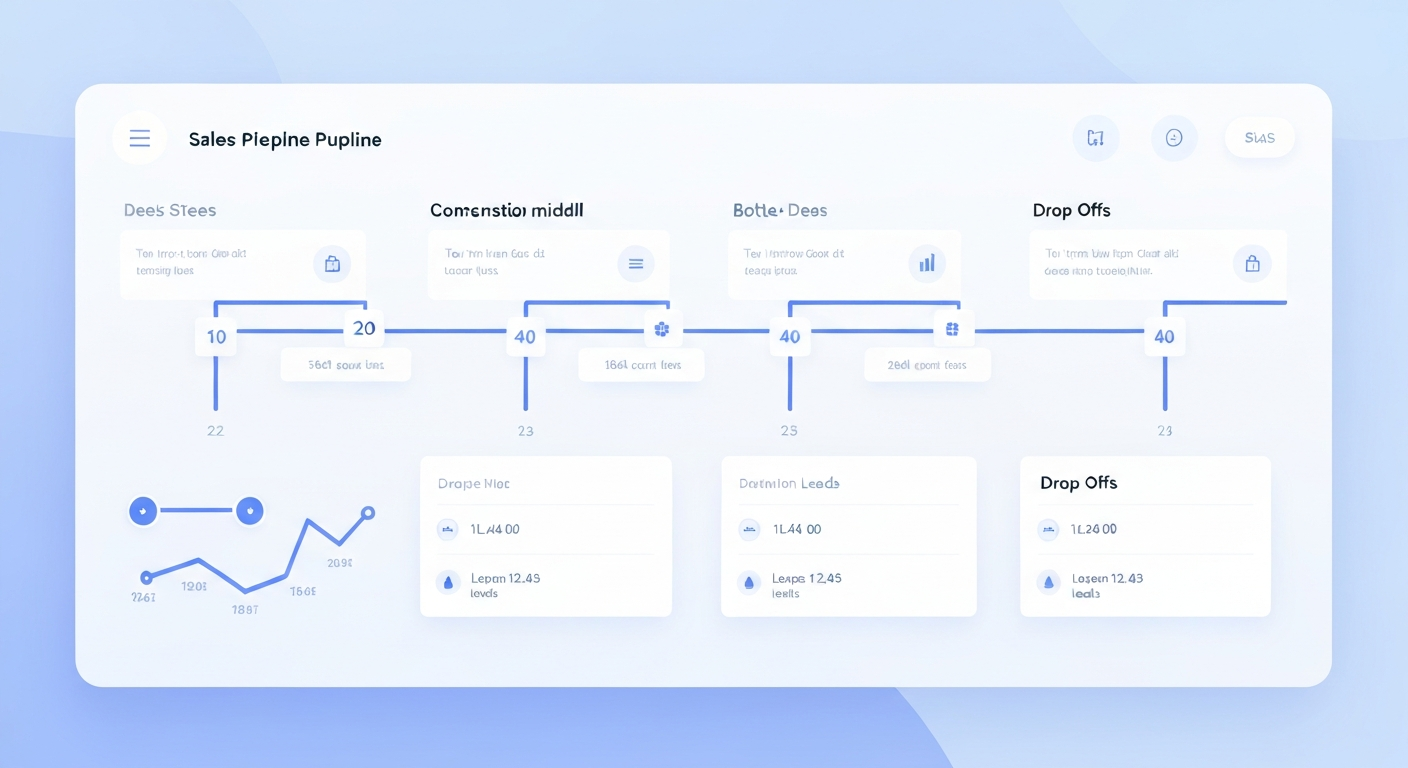
First, you must define the exact steps of your sales process. This might look like: New Lead, Contact Attempted, Consultation Booked, Proposal Sent, and Closed Won. Every prospect must fit into one of these specific categories. There is no gray area.
Second, you need automation to handle the repetitive tasks. When a lead moves into the "Proposal Sent" stage, a system should automatically remind you to follow up three days later. This removes the burden from your memory and ensures consistency.
Finally, you need total visibility. You should be able to look at one screen and instantly know the health of your business, the status of every deal, and the exact actions you need to take today.
How a Sales System Fixes This
This is where a professional sales system completely changes the game. When you implement a proper system, you are not just organizing your contacts. You are building a predictable revenue engine.
With a dedicated system in place, every single lead enters one centralized location. Whether they call you, fill out a form on your website, or message you on social media, their information is captured automatically. There is no manual data entry required.
Every deal is tracked meticulously. You can see exactly when the lead came in, what messages have been sent, and what the next step is. Every stage is clearly defined, and moving a prospect from one stage to the next is as simple as dragging and dropping their name.
Most importantly, follow-up becomes entirely consistent. The system ensures that no lead is ever forgotten. If a prospect goes cold, the system can automatically reach out to re-engage them. If a proposal is pending, the system ensures you follow up until you get a firm yes or no. This is the core of effective sales pipeline management.
Before vs After
To truly understand the impact of a structured system, let us look at the stark contrast between a broken pipeline and an optimized one.
Before (The Broken Pipeline):
- Disorganized and chaotic daily operations
- Missed leads and delayed response times
- No visibility into future revenue or deal status
- Constant stress and reliance on human memory
- Wasted marketing dollars on unconverted inquiries
After (The Structured System):
- A structured pipeline with clearly defined stages
- Clear deal stages that dictate the exact next steps
- Consistent follow-up that runs automatically in the background
- Predictable revenue and accurate business forecasting
- Total peace of mind knowing no opportunity is slipping through the cracks
What This Looks Like in Practice
Let us imagine a realistic business scenario. You run a busy service company and you are currently out in the field. A high-value prospect visits your website and requests a consultation. In the past, this request would sit in your email inbox until late at night. By the time you responded the next morning, the prospect had already booked a consultation with a competitor who answered immediately.
Now, imagine that same scenario with a proper sales system in place. The prospect submits the request. Instantly, they are added to your pipeline under the "New Lead" stage. The system automatically sends them a personalized text message thanking them for their interest and providing a link to schedule their consultation directly on your calendar.
The prospect books a time that works for both of you. The system automatically moves them to the "Consultation Booked" stage and sends them a confirmation email with details about what to expect. It also sends them a reminder text one hour before the meeting to eliminate no-shows.
All of this happens while you are still out in the field, working on another project. You did not have to lift a finger, check your email, or rely on your memory. When you finally sit down at your desk, you see a new consultation on your calendar and a perfectly organized pipeline. You know exactly who you are speaking with, what they need, and what stage they are in.
This is not magic. This is simply what happens when you stop relying on effort and start relying on a system. You regain your time, you close more deals, and your business finally begins to scale predictably.
Stop Guessing Where Your Deals Are
You deserve a business that runs smoothly and a pipeline that drives predictable revenue. Schedule a Strategy Call to build a system that tracks every deal and moves it forward.